What is a plate alloy boat?
A plate alloy boat is built from thick sheets of marine-grade aluminium plate that are cut to shape, folded and welded into a hull. Nothing is pressed into form from thin sheet. Every join is a weld, every panel is structural, and the whole thing is put together by hand.
That's why plate boats feel different the moment you step aboard. They're heavier. They sit deeper. They don't drum and flex underfoot. And when you clip an oyster-covered rock or load a full crew and a day's ice, the hull doesn't complain.
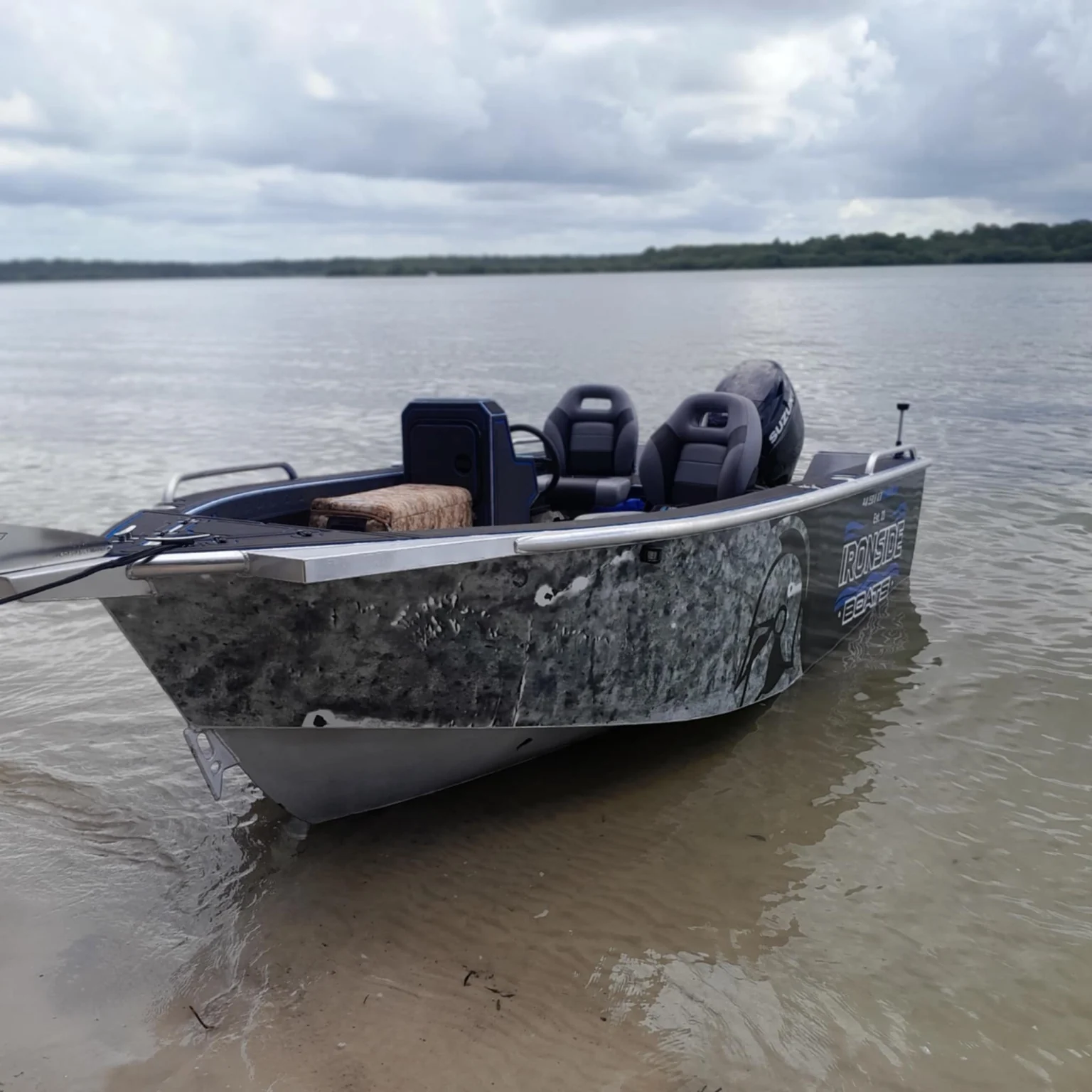
Plate vs pressed alloy
Both are aluminium boats. That's where the similarity stops.
| Plate Alloy | Pressed Alloy | |
|---|---|---|
| Hull material | Thick 5083 marine plate | Thin pressed sheet |
| Construction | Cut, folded, hand welded | Pressed and riveted or welded |
| Impact tolerance | High — takes a hit and keeps going | Low — dents and oil-cans |
| Ride in chop | Heavier, quieter, drier | Lighter, noisier, wetter |
| Customisation | Fully bespoke to brief | Fixed production layouts |
| Cost | Higher up front | Lower up front |
Neither is universally "better". If you tow a light boat to a flat estuary a few weekends a year, pressed alloy is a sensible answer. If you're crossing bars, working the boat, running remote coast or carrying gear and people who matter to you — plate earns its weight.
Why 5083 marine grade?
5083 is a high tensile marine-grade aluminium alloy. It holds its strength through the weld — a lot of alloys don't — and it resists saltwater corrosion without needing paint to survive. That's why it's the standard for serious plate hulls, and why every Battle Forged boat is built from it.
Left bare, a 5083 hull weathers to a dull grey and just keeps working. No gelcoat to chalk, no paint to peel, no osmosis to worry about in twenty years.
Four questions to ask any builder
What plate thickness is the bottom, sides and transom?
Thickness is where cost hides. A builder should give you the numbers without hesitating, and explain why those numbers suit the way you'll use the boat.
What alloy grade is actually being used?
5083 is the high tensile marine grade you want for a hull. If a builder is vague about grade, that's your answer.
Who is doing the welding?
Aluminium is unforgiving. Ask who lays the seams, how long they've been doing it, and ask to see a weld in person.
What is confirmed in writing before build?
Layout, storage, electrical, electronics, trailer and finish should all be locked against your brief at quotation — not decided as you go.
Ask us the hard questions.
We'll give you plate thicknesses, alloy grade and an honest opinion on whether a plate boat is even the right call for how you use the water.
Talk to a builder